These links will take you off the Anomalous Medical website.
The Piper Education Research Center (PERC) is a continuing education center where doctors can learn about the concepts of TMJ problems though facility or online courses. PERC is unlike any other organization in the world. We are dedicated specifically to the promotion of educational standards that will benefit the temporomandibular joint population.
The educational and research philosophy of the Piper Education and Research Center is based upon seeking the truth about the disorders affecting the temporomandibular joint. Our goal is to advance the highest standards of diagnosis and treatment. We maintain the latest parameters of care for all phases of joint, occlusal, and pain management. These standards are shared openly and thoroughly with treating doctors and with the public at large.
Doppler Diagnosis guides you and the patient through every step of a Doppler Asculatation exam to screen for joint disorders and healthy joints.
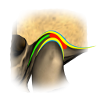
Piper Classification of TMJ Derangements demonstrates the different Piper Stages using informative animated sequences. Follow along with Dr. Mark Piper as he explains each Piper Classification stage.
Nerve Blocks shows users precisely where to inject a nerve blocking agent to block the nerves in the head and neck area.
Doppler Theory is an introduction to Doppler ausculatation. Learn the concepts behind joint crepitation's relationship to joint anatomy.
The Doppler Bundle includes the Doppler Theory and Doppler Diagnosis. Together these provide an introduction to the Doppler auscultation method of diagnosing joint dysfunction.
How does joint dimension loss affect anterior guidance? These animations show normal and abnormal guidance from various angles.
Understand how occlusal relationships change and adapt to joint and condylar bone changes. Several animations are included that show how the profile and occlusion changes when the vertical dimension in the joint is altered. Based on Dr. Mark Piper’s course material.
Follow along with Dr. Mark Piper as he explains normal and abnormal mandibular movements.